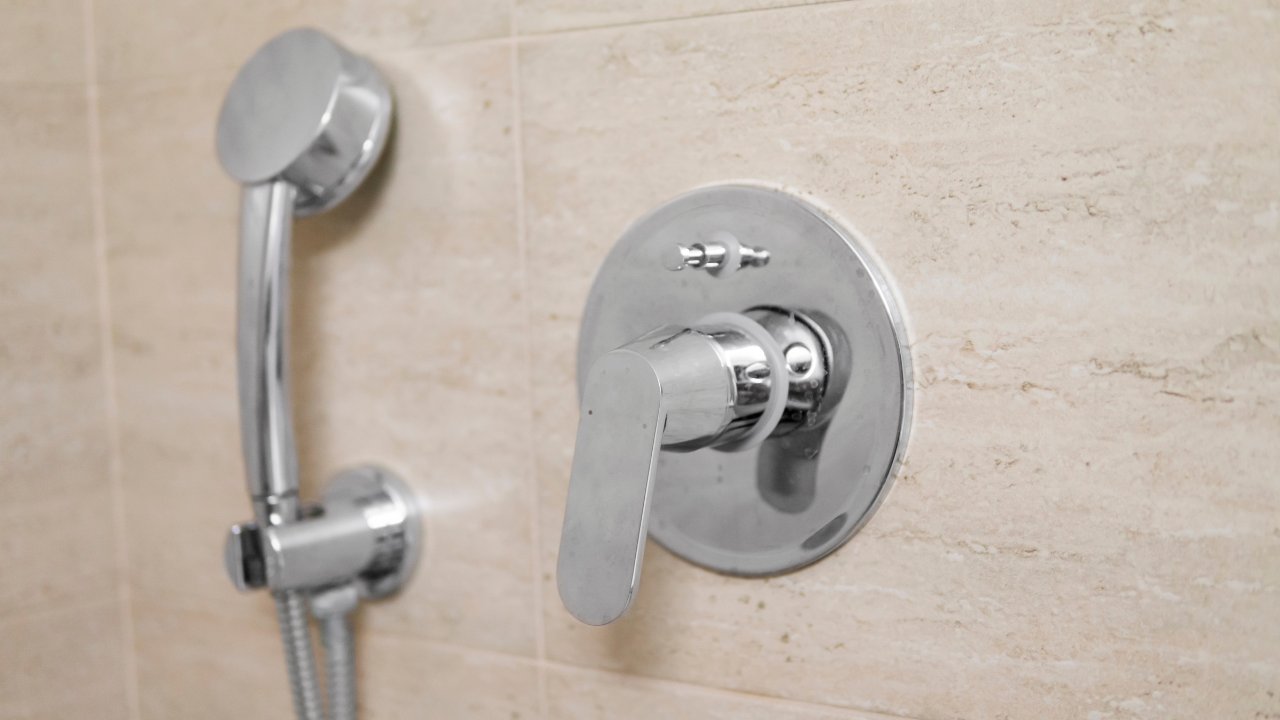
A modern bathroom can look like a million bucks and still feel… slightly annoying. You know the feeling. The vanity is gorgeous, the mirror has that soft hotel glow, and then the faucet handle squeaks like it’s auditioning for a haunted house.
So let’s fix that.
If you’re shopping for the best faucets for a modern bathroom design, you’re not just picking a spout that “matches.” You’re choosing something you’ll touch every single day, sometimes before coffee, sometimes with toothpaste on your chin, sometimes in a hurry because life has no respect for your morning routine.
At American Bath and Shower, we approach faucets the way we approach remodels: make it look sharp, make it work better than expected, and make sure you’re not paying for a trendy headache. We also proudly partner with brands like Samuel Muller and Hydro Dimensions to deliver excellence across the bathroom experience, from fixtures to bathing solutions.
Now, which faucet belongs in your bathroom?
Key Takeaways
- Modern faucets are about intention, not just looks. Clean lines, thoughtful proportions, and consistent finishes matter more than flashy details.
- Fit and function come before style. Spout reach, height, handle comfort, and sink compatibility determine whether a faucet feels effortless or frustrating in daily use.
- What’s inside the faucet matters long term. Quality cartridges, serviceable parts, and a solid warranty are more important than surface-level aesthetics.
- Water efficiency doesn’t have to feel weak. Well-designed aerators and pressure-balanced systems can save water without sacrificing performance.
- Finish choices should reflect real life. Chrome and brushed finishes are forgiving, while matte black and warm metals require more intentional care and coordination.
- Planning early delivers the best results. Aligning faucet selection with plumbing, sink choice, and overall bathroom design avoids costly mistakes and long-term regret.
What “Modern” Actually Means in Faucet Land
Modern faucets aren’t defined by one exact look. “Modern” is really a category that focuses on simplicity, clean geometry, and a sense of intention. The faucet should feel current and refined without trying to be decorative. If it looks calm and confident on the vanity, it’s doing its job.
The biggest visual clue is the shape. Modern faucets usually have clear, controlled lines. They avoid ornate curves, carved details, and extra design “layers.” When a faucet has too many visible parts—stacked rings, busy handle shapes, multiple transitions—it can look impressive on a product page but feel cluttered once installed. Modern design works best when the silhouette is straightforward and the details stay quiet.
Finish is where modern bathrooms either feel cohesive or fall apart. A faucet has to work with nearby elements like the shower trim, cabinet hardware, mirror frame, lighting, and accessories. Modern doesn’t require everything to match perfectly, but it does require consistency. The finish should either match the main hardware finish or be part of a planned mix that repeats across the space, so nothing looks accidental.
Modern also doesn’t have to mean cold. The newer version of modern bathrooms is often warmer and more lived-in, using finishes like brushed nickel and softer gold tones alongside matte black. The key is balance: keep the forms clean, keep the finish choices intentional, and the faucet will read modern even if the rest of the bathroom has warmth and texture.
The 6 Decisions That Matter Before You Buy
Faucet shopping looks simple until you realize you’re choosing a small machine that also doubles as jewelry. It has to fit your sink, feel good in your hands, work well with your water pressure, and still look good five years from now, when the “new and shiny” feeling is long gone. If you decide these six things up front, you’ll avoid the most common bathroom-upgrade heartbreaks: ordering the wrong configuration, fighting splash all day, or ending up with a faucet that looks great but feels annoying every single morning.
1) Your mounting type and sink hole count
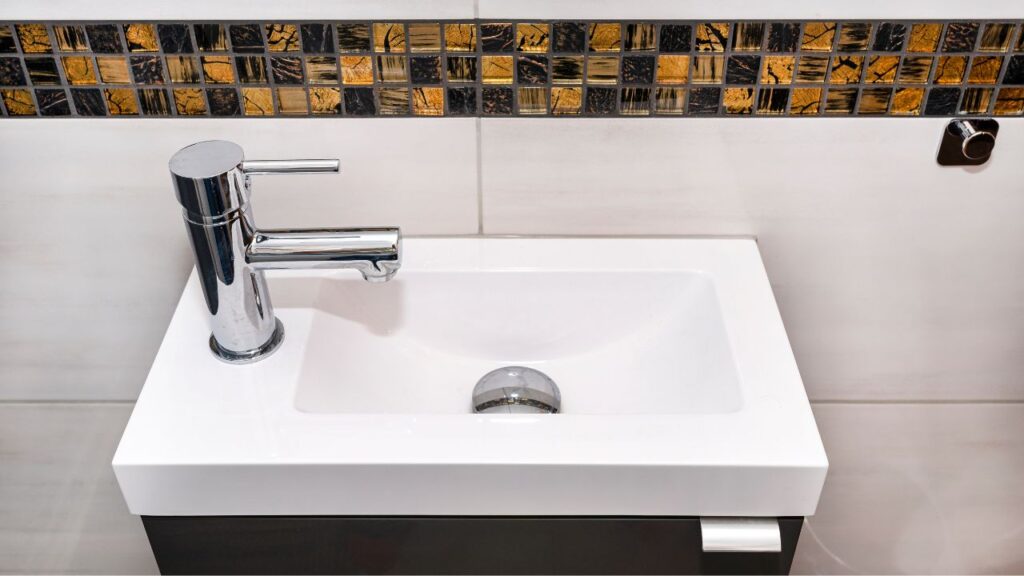
Before you fall in love with any faucet, look at what you’re working with: how many holes are in your sink or countertop, and how they’re spaced. This one detail quietly controls what’s even possible. A single-hole setup is the cleanest, most modern-looking option, and it’s great for smaller vanities because it keeps the deck visually calm.
Centerset is the standard 4-inch setup you’ll see everywhere; it’s compact, practical, and usually the most straightforward path if you don’t want to change the sink. Widespread gives you that “designed” look because the spout and handles are separate pieces, but it needs more real estate and a bit more care during installation.
Wall-mounted is the Pinterest dream (floating, sleek, architectural), but it’s also the most “plan-it-or-regret-it” option because your plumbing lives in the wall, and the spout reach must match the sink precisely.
Quick tip: If you have extra holes but want a cleaner look, many single-hole faucets can use a deck plate to cover them, just confirm compatibility so it doesn’t look like an afterthought.
2) Spout reach and spout height
This is the quiet truth: many beautiful faucets are awkward because the spout is the wrong size for the bowl. Spout reach controls where the water lands, and you want that stream to hit near the drain area—not the back wall of the sink (splash zone) and not too close to the front edge (also splash zone, but now it’s on your shirt).
Too-short reach tends to make water bounce; too-long reach can feel cramped, especially in a smaller basin where your hands keep bumping the bowl. Height matters just as much. Vessel sinks usually need taller faucets or wall-mounted options so you’re not trying to wash your hands in a low ceiling. Undermount and standard drop-in sinks often look and feel best with a tighter, lower profile that doesn’t overpower the vanity.
Quick tip: Measure from the faucet mounting point to the drain center and compare it to the faucet’s listed reach. This is a straightforward check that prevents most splash problems.
3) Handle style and everyday comfort
Single-lever faucets are everywhere in modern bathrooms for a reason: they’re simple, fast, and you can control temperature and flow without doing a little “hot-cold-hot-cold” dance. Two-handle faucets can look more classic or more “tailored,” and they’re great when you want symmetry, but they’re usually slower to use and less friendly for kids or anyone with limited grip strength.
If accessibility matters in your home (now or in the future), handling choice is not just a style decision. ADA operability guidance emphasizes controls that can be used with one hand, without tight grasping/pinching/twisting, and without requiring more than 5 pounds of force.
Quick tip: If you want modern and practical, a lever handle is often the best overlap of “looks good” and “works for everyone.”
4) What’s inside matters more than what’s outside
The finish gets compliments. The valve and cartridge earn your long-term gratitude. Two faucets can look nearly identical and perform completely differently over time because the internals are what determine how smoothly it operates and how likely it is to drip later.
A well-built faucet usually has solid internal components, a cartridge designed for long-term use, and serviceable parts without turning your bathroom into a project. This is where warranty and parts availability matter more than people think, because even good faucets may eventually need a cartridge swap. You want that to be an easy fix, not a scavenger hunt.
Quick tip: When two models look similar, let “reputable warranty + easy replacement parts” be the tiebreaker. The faucet you can maintain wins.
5) Water efficiency without the sad drizzle
Nobody wants a faucet that feels like it’s politely apologizing while it rinses your hands. In the U.S., the commonly referenced “standard” flow rate for bathroom faucets is 2.2 gallons per minute, and WaterSense-labeled bathroom sink faucets and accessories use a maximum of 1.5 gallons per minute.
The Environmental Protection Agency notes this can reduce flow by 30% or more compared to 2.2 gpm without sacrificing performance. The nuance is that local rules can be stricter. California codes commonly cap residential lavatory faucets at 1.2 gpm at 60 psi. So, don’t rely on the marketing line alone; check the spec sheet for the actual flow rate and make sure it matches your local requirements.
Quick tip: A good aerator matters; modern aerators can keep the stream feeling full even at lower flow rates, so you can be efficient without feeling punished.
6) Don’t forget the drain and sink compatibility
This is where “complete set” myths go to die. Some faucets include a pop-up drain assembly; some don’t. Some drains are designed for sinks with an overflow; others are intended for no-overflow basins. And even if the faucet is perfect, a mismatched drain can create installation surprises or just look visually off. This is especially annoying when you’re trying to keep finishes consistent because a near-match on paper can look like a mismatch in real lighting.
Quick tip: Confirm whether your sink has an overflow opening before you buy the drain, and if you’re going for a clean, modern look, decide in advance whether you want a pop-up, push-button, or grid drain so the whole setup feels intentional.
Best Faucet Styles for Modern Bathrooms
“Best” depends on your space, your habits, and what you’re trying to avoid. (For some people, that’s splashing. For others, it’s fingerprints. For the rest of us, it’s regretting a trendy finish by next Thursday.)
Minimal single-handle faucets for everyday bathrooms
If your goal is clean and timeless, a single-hole, single-lever faucet is usually the safest modern pick. It pairs well with floating vanities, simple mirrors, and calm tile choices.
It’s also easier to keep clean. Less surface area means less buildup, fewer crevices, fewer spots where soap scum goes to retire.
Widespread faucets for double vanities and statement countertops
Have a wider vanity top or a double sink? Widespread faucets can look more balanced and upscale. The spacing gives a tailored look, especially when paired with thoughtfully chosen cabinet hardware.
This is also where you can lean into finish choices, such as brushed gold, mixed metal, or a warmer, modern aesthetic.
Wall-mounted faucets for a true modern signature
Wall mounts look amazing with vessel sinks, floating vanities, and clean backsplash tile. They also keep the countertop less cluttered, which is a small daily luxury you’ll appreciate more than you expect.
The trade-off is planning and precision. Rough in depth, spout reach, and handle placement all matter. If you’re remodeling anyway, it’s a great time to consider it. If you’re swapping a faucet on an existing vanity, it’s probably not the moment to start opening walls unless you enjoy chaos as a hobby.
Finish first shoppers vs function first shoppers
Are you the type who chooses the faucet because it “looks right,” then makes the specs work? Or do you start with specs and hope something pretty shows up?
Either way works. Just don’t ignore one side of the equation.
Modern bathrooms reward coordination. That’s why many homeowners like sticking with a cohesive collection across sinks and showers, especially when selecting complementary pieces from a brand ecosystem like Samuel Mueller for bathroom fixtures and trims.
Finishes That Look Modern and Survive Real Life
The finish is where modern bathrooms either feel curated or as a showroom exploded.
- Chrome looks crisp, works with almost anything, and tends to be easiest to maintain. If you want modern without fuss, it’s a smart pick.
- These finishes hide water spots better than chrome and work beautifully in warmer modern designs. If your home has hard water, you’ll likely appreciate the low drama.
- Matte black looks sharp. It also shows mineral buildup and soap residue more than people expect, depending on the exact finish and your water chemistry.
- Brushed gold, champagne bronze, and softer brass tones can look modern when the shape is simple, and the finish isn’t overly shiny. Pair them with clean tile and minimal accessories, and they feel elevated rather than flashy.
Installation Realities Nobody Brags About
A faucet can be “easy to install” the way a recipe can be “easy,” while casually asking you to make your own puff pastry.
So, let’s talk honestly.
DIY or pro
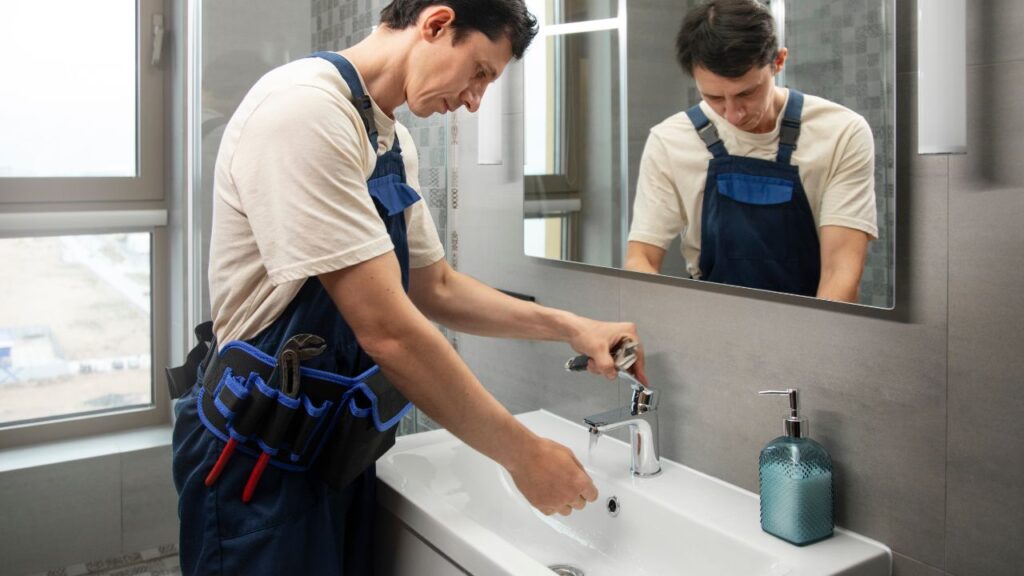
If you’re swapping a faucet on an existing vanity, DIY can be realistic for many homeowners. If you’re changing mounting type, dealing with old shutoff valves, moving plumbing, or going wall-mounted, a pro is usually worth it.
And if you’re already remodeling, it’s smart to align your faucet selection with your plumbing plan early. That’s where the best results happen.
Keep your future self in mind
Choose a faucet with accessible aerators and replaceable parts. Many common performance complaints with faucets stem from clogged aerators or worn cartridges, especially in areas with hard water.
Also, read the warranty. You don’t need a legal degree, but you do need to know what’s covered.
How Faucets Fit Into the Bigger Bathroom Picture
Here’s the part most faucet guides skip: a faucet doesn’t live alone. It’s part of a whole system.
Coordinating with Samuel Mueller’s selections
If you’re building a modern bathroom with a cohesive style, choosing fixtures and trims from a coordinated lineup can make the whole room feel intentional. Samuel Mueller offers a range of bathroom products, including faucets and shower systems, which can simplify matching finishes and design language across the space.
The practical tip: confirm the finish names and how they match across categories. “Brushed nickel” can look slightly different from one product line to another, even within the same brand.
Planning around Hydro Dimensions bathing solutions
Not every bathroom remodel is about aesthetics. Sometimes it’s about safety, comfort, or long-term accessibility. Hydro Dimensions specializes in walk-in and specialty tubs and hydro massage systems, which can shape how you plan the room layout and fixture choices.
If a walk-in tub or hydrotherapy setup is part of the plan, think holistically: placement, clearances, and how controls and hand showers will be used comfortably.
This is also where design guidelines can be helpful, especially if you’re planning for aging in place or universal design. The NKBA bath planning guidelines are a solid resource for spacing and access considerations.
Common Buyer Questions and the Real Answers
Will a water-efficient faucet feel weak?
Sometimes. Often, no.
Flow rate isn’t the whole story. Aerator design and pressure compensation matter. A good low-flow faucet can still feel strong and rinse cleanly. And for handwashing and toothbrushing, you might not notice a difference at all, except on your water bill.
Are wall-mounted faucets risky?
They’re not risky so much as unforgiving.
They demand correct rough-in depth, proper waterproofing, and the right spout reach. If you’re working with experienced installers and planning, they’re a fantastic modern choice. If you’re trying to wing it, maybe don’t.
Is matte black going to chip?
Quality matters. Cleaning habits matter too.
Avoid harsh abrasives and aggressive chemicals. Wipe down regularly. If your water leaves heavy mineral deposits, plan for a little extra maintenance, or choose a more forgiving finish.
What faucet finish looks most modern right now?
Matte black and brushed nickel are the most common modern finishes, but warm brushed metals are rising fast in “soft modern” bathrooms. The most modern look usually comes from the faucet shape, not just the color.
How will a faucet fit my sink?
Check the hole configuration and spacing first. Then confirm the spout reach and height so the water hits near the drain. If you’re unsure, measure the depth of your sink bowl and the distance from the mounting point to the drain.
How long should a quality bathroom faucet last?
With good internal components and basic maintenance, many faucets last for years. Longevity depends on water quality, usage, and how quickly small issues like aerator clogs are addressed.
Do I need a plumber to replace a bathroom faucet?
Not always. Straight swaps can be DIY friendly. If shutoff valves are old, plumbing is corroded, or you’re changing mounting types, a plumber is a safer bet.
Quick Decision Guide
- If your vanity has one hole and you want the cleanest, modern look, a single-hole, single-lever faucet is usually your best friend.
- If you have a wide countertop and want a more luxurious feel, widespread faucets bring balance and a designer look.
- If you’re remodeling and want a statement that stays modern for years, a wall-mounted faucet can be stunning when planned well.
- If hard water and water spots drive you crazy, lean toward chrome or brushed finishes, and prioritize easy-to-clean surfaces.
And if you’re trying to match a full bathroom suite, using coordinated options from trusted partners can simplify the process and reduce finish mismatches later.
One Clear Next Step
Want a modern bathroom that looks sharp and works effortlessly every day, not just in photos? Explore American Bath and Shower and schedule a consultation so we can help you choose the right faucet style, finish, and setup to match your space, with trusted partners like Samuel Muller and Hydro Dimensions.