Walk into any hardware store or scroll through bathroom fixture websites, and you’ll see hundreds of showerhead options. The first real decision you face isn’t about finish or spray pattern, it’s whether you want a handheld or fixed installation. That choice affects your daily shower routine more than most people realize before they make it.
This isn’t a question of which showerhead is objectively better. It’s about which design aligns with how you actually use your shower, who else uses it, and whether your needs might change in the future. This blog breaks down the functional differences so you can make an informed decision rather than defaulting to whatever’s already installed.
Key Takeaways
- Handheld showerheads offer flexibility for targeted rinsing, cleaning the shower, bathing children or pets, and meeting accessibility needs for users with limited mobility.
- Fixed showerheads provide a hands-free shower experience with broader coverage, often preferred for quick daily showers and modern aesthetic appeal.
- Both showerhead types are available in water-efficient models that meet EPA WaterSense standards and use no more than 2.0 gallons per minute without sacrificing performance.
- Combination systems that include both a fixed overhead showerhead and a handheld unit deliver maximum versatility for households with varied needs.
- Installation complexity and cost differ significantly, with fixed models requiring only basic DIY skills while combination systems often benefit from professional installation.
Fixed Showerheads: The Traditional Standard
Fixed showerheads mount directly to the shower arm extending from the wall. Once installed, they stay in position. You step under the water stream, and the showerhead directs water down from a fixed point above you.
This is the configuration most people grew up with, and it remains the default in many new construction projects and rental properties. The design is straightforward, the installation is simple, and the functionality works for most daily showers.
The primary advantage is the hands-free experience. You can lather shampoo, apply body wash, or stand under the stream without holding anything. For quick morning showers where efficiency matters more than customization, a fixed showerhead does exactly what’s needed with minimal fuss.
Coverage and spray patterns on fixed models tend to emphasize broad, even distribution. Rain-style showerheads, which have become popular in recent years, exemplify this approach. They create a wide, soft spray that mimics rainfall, covering more of the body at once compared to narrower spray patterns.
Aesthetic appeal is another consideration. A well-chosen fixed showerhead becomes a design element in the bathroom. Modern designs in brushed nickel, matte black, or polished chrome add visual interest without introducing mechanical complexity. The clean lines work well in contemporary bathrooms where minimalism is the goal.
The limitations become apparent in specific use cases. Rinsing the shower walls after cleaning requires maneuvering around the fixed stream. Washing a dog in the tub means trying to direct the animal under the showerhead rather than bringing water to where you need it. Users with limited mobility may struggle to position themselves correctly under a fixed stream, especially if balance or standing endurance is an issue.
Handheld Showerheads: Flexibility by Design
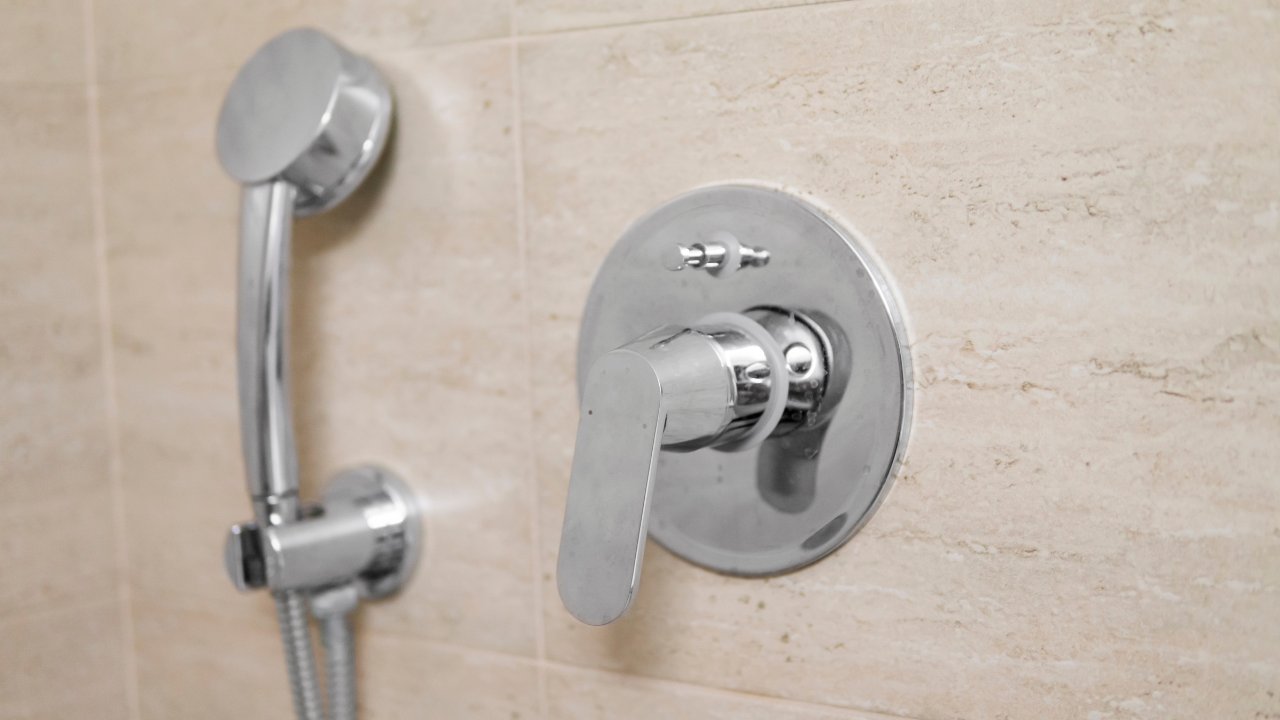
A handheld showerhead connects to the shower arm via a flexible hose, typically 5 to 8 feet long. The showerhead can be held in your hand for targeted use, or it can rest in a wall-mounted bracket for a hands-free shower, similar to a fixed model.
The defining feature is control. You decide where the water goes. Need to rinse your feet without bending over? Direct the spray downward. Want to rinse shampoo from a child’s hair without getting water in their face? Angle the stream accordingly. Cleaning soap scum from the shower floor? Bring the water directly to the surface.
This flexibility extends beyond personal use. Handheld showerheads make bathing pets considerably easier. Dog owners who’ve tried both configurations rarely go back to fixed models. The same applies to parents of young children who need precise control during bath time.
Accessibility is a significant advantage. For users with mobility limitations, arthritis, balance concerns, or conditions that make standing difficult, a handheld showerhead transforms the shower from a challenging task into a manageable one. The ability to sit on a shower bench and bring the water to you, rather than having to position yourself under a fixed stream, is a practical difference that matters daily.
According to aging-in-place design resources, handheld showerheads are considered essential accessibility features for bathrooms designed to accommodate changing mobility needs. Many accessible bathroom remodels include a handheld showerhead mounted on a slide bar, allowing users to adjust the height and angle without tools.
The trade-offs are mostly about convenience. Handheld models require you to hold them for certain tasks, which some users find less relaxing than a purely hands-free shower. The hose and bracket add visual elements that don’t suit every bathroom aesthetic. And in shared bathrooms, the hose sometimes ends up in awkward positions if the previous user didn’t return it to the bracket properly.
Water Efficiency: Both Options Can Perform Well
Water consumption isn’t determined by whether a showerhead is handheld or fixed. It’s determined by the flow rate, measured in gallons per minute (GPM).
Federal regulations set a maximum flow rate of 2.5 GPM for all showerheads. However, the EPA’s WaterSense program certifies showerheads that use no more than 2.0 GPM while still meeting performance standards for spray force and coverage. These efficient models are available in both handheld and fixed configurations.
A WaterSense-certified showerhead can save the average household more than 2,900 gallons of water per year compared to a standard 2.5 GPM model. The water savings also reduce energy consumption, since less hot water needs to be heated. For households with electric water heaters, this translates to roughly 300 kilowatt-hours saved annually.
The key is looking for the WaterSense label when shopping, regardless of which showerhead style you choose. A water-efficient handheld showerhead will outperform an inefficient fixed model, and vice versa. The flexibility or fixed nature of the installation doesn’t determine efficiency; the internal engineering does.
Spray Patterns and Pressure Considerations
Both handheld and fixed showerheads offer multiple spray pattern options. Rain, massage, mist, and combination settings are available across both categories. The spray pattern you prefer is a separate decision from the installation type.
Pressure perception can differ between the two styles. A fixed rain showerhead disperses water over a wide area, which some users find relaxing while others find it lacking in intensity. A handheld showerhead with a concentrated massage setting delivers a more focused stream, which can feel more powerful even at the same GPM rating.
Your home’s water pressure also plays a role. In homes with low water pressure, a handheld showerhead lets you bring the spray closer to your body, helping compensate for the reduced pressure. With a fixed showerhead, you’re limited to whatever pressure reaches the fixed mounting point.
Installation and Cost
Fixed showerheads are among the simplest plumbing fixtures to install. The process involves removing the old showerhead, wrapping the shower arm threads with plumber’s tape, and screwing on the new unit. Most homeowners can complete this in under 10 minutes with no specialized tools.
Handheld showerheads require a similar installation if you’re replacing an existing handheld model. If you’re converting from a fixed showerhead to a handheld, you’ll need a bracket mount and potentially a diverter valve, depending on whether you want to retain a fixed option as well. This adds a few steps but remains well within DIY territory for most people.
Combination systems, which include both a fixed overhead showerhead and a handheld unit, offer the best of both configurations but require more installation work. These systems typically use a diverter valve to switch between the fixed and handheld outputs. Professional installation is recommended for combination systems, especially if modifications to existing plumbing are needed.
Cost ranges vary more by quality and features than by whether the showerhead is handheld or fixed. Basic models of either type start around $20 to $40. Mid-range options with better finishes and multiple spray patterns run $60 to $150. High-end models with premium materials, advanced spray technologies, or designer finishes can exceed $300.
Cleaning and Maintenance
Fixed showerheads accumulate mineral deposits just like handheld models, but their fixed position sometimes makes cleaning less convenient. You can’t bring the showerhead to the sink to soak it in vinegar or examine the spray nozzles up close. Cleaning happens in place, which works fine, but requires different techniques.
Handheld showerheads offer easier access for maintenance. You can detach the head from the hose, soak it in a descaling solution, and inspect the spray face closely. This convenience becomes more valuable in areas with hard water, where mineral buildup is a recurring issue.
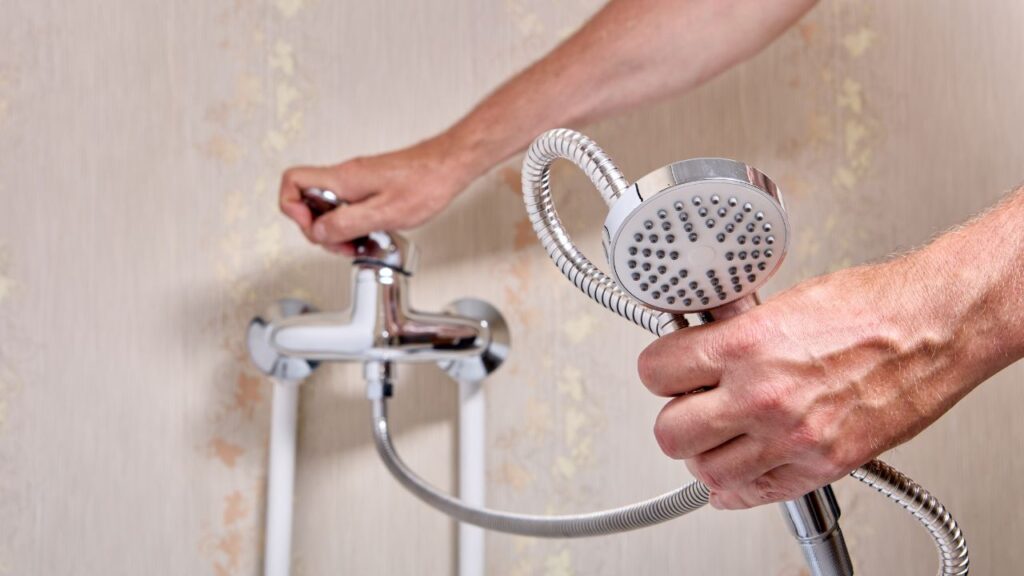
The hose on a handheld showerhead is an additional component that eventually needs to be replaced. Most hoses last several years with normal use, but they can develop leaks or kinks over time. This is a minor maintenance consideration that doesn’t apply to fixed models.
Which Configuration Works Best for Different Households
The right choice depends on who uses the shower and what they need it to do.
Households with young children or pets benefit significantly from handheld showerheads. The ability to control the direction of water during bath time is a practical advantage that fixed showerheads can’t match.
Bathrooms designed for aging in place or accessibility should include a handheld showerhead as a standard feature. The flexibility supports users across a range of mobility levels, and the option to use it while seated is essential for many individuals with limited mobility.
Shared bathrooms with multiple users of different heights work better with either a handheld model or a combination system. Fixed showerheads mounted at a height optimal for one person can be awkwardly positioned for someone significantly taller or shorter.
Single-user bathrooms where the primary need is a quick, efficient daily shower can work well with a fixed showerhead, particularly if aesthetic simplicity is a priority and accessibility isn’t a concern.
Rental properties and guest bathrooms often default to fixed showerheads because of their simplicity and lower likelihood of user error. There’s less that can go wrong, and the hands-free operation works for most guests.
A Direct Comparison
Here’s how the two configurations compare across key daily-use factors:
| Factor | Fixed Showerhead | Handheld Showerhead |
| Hands-free shower | Yes | Yes (when in bracket) |
| Targeted rinsing | Limited | Excellent |
| Ease of cleaning shower | Difficult | Easy |
| Bathing children/pets | Challenging | Excellent |
| Accessibility features | Limited | Excellent |
| Visual simplicity | Excellent | Good |
| Installation difficulty | Very easy | Easy to moderate |
| Maintenance | Standard | Standard plus hose |
| Water efficiency | Model-dependent | Model-dependent |
| Cost range | $20–$300+ | $20–$300+ |
The Combination Solution
For households that want both the simplicity of a fixed overhead showerhead and the flexibility of a handheld unit, combination systems are the practical middle ground.
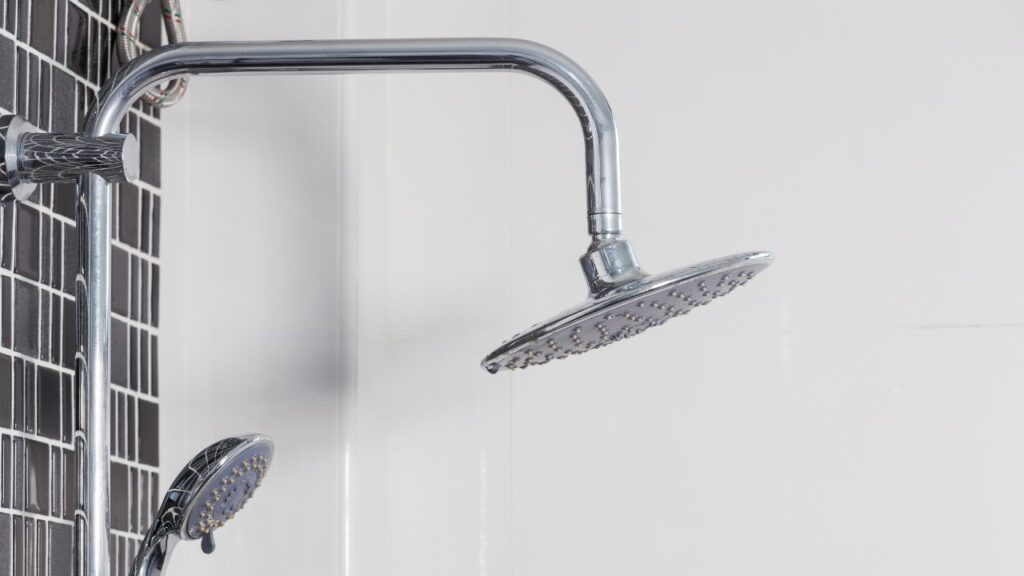
These installations typically include a large fixed showerhead mounted on the ceiling or high on the wall, plus a handheld unit mounted on a slide bar at a lower position. A diverter valve allows you to use either showerhead independently or both simultaneously if the system is designed for dual operation.
The advantage is obvious: you get the relaxing, hands-free experience of a rain showerhead for your daily routine, with the handheld option available when you need targeted control. The trade-off is cost and installation complexity. Combination systems are more expensive than single-showerhead setups and require more complex plumbing to install correctly.
For families with diverse needs, the investment often makes sense. One user can enjoy a rain shower while another appreciates having the handheld option for post-workout rinsing or hair washing.
FAQ
Can I install a handheld showerhead myself?
Yes. Handheld showerhead installation is a straightforward DIY project if you’re replacing an existing showerhead. You’ll need plumber’s tape and an adjustable wrench. The entire process typically takes 15 to 30 minutes.
Do handheld showerheads use more water than fixed ones?
Not inherently. Water usage is determined by the flow rate (GPM rating), not whether the showerhead is handheld or fixed. Both types are available in water-efficient models that meet EPA WaterSense standards of 2.0 GPM or less.
Are fixed showerheads better for water pressure?
No. Water pressure is determined by your home’s plumbing system and the showerhead’s internal design, not whether it’s fixed or handheld. Both types can deliver strong pressure if properly engineered.
How long do handheld showerhead hoses last?
Most hoses last 3 to 7 years with normal use. Higher-quality hoses made from stainless steel or reinforced materials tend to last longer than basic plastic models. Replacement hoses are inexpensive and easy to install.
Can I have both a fixed and handheld showerhead?
Yes. Combination systems include both a fixed overhead showerhead and a handheld unit. A diverter valve allows you to switch between them. Some systems allow both to run simultaneously.
Which showerhead type is better for accessibility?
Handheld showerheads are significantly more accessible. They allow users to shower while seated and provide control over the direction of water flow, which is essential for individuals with limited mobility, balance concerns, or conditions that make standing difficult.
Do fixed rain showerheads waste more water?
Not necessarily. Rain showerheads are available in both standard (2.5 GPM) and water-efficient (2.0 GPM or less) versions. The wide spray pattern doesn’t inherently mean higher water consumption, it just distributes the same amount of water over a larger area.
Making the Decision
The best showerhead for your bathroom is the one that fits how you actually use the shower, not just how you imagine using it.
If your current showerhead frustrates you because you can’t rinse the shower walls easily, or because bathing your dog is a struggle, or because you find yourself wishing you could direct water to a specific spot, that frustration is data. A handheld showerhead solves those problems.
If you value the simplicity of a fixed installation and your primary use case is standing under the water for a straightforward shower, and you don’t have accessibility concerns or specialized cleaning needs, a quality fixed showerhead does the job without added complexity.
If you’re unsure, or if you share the bathroom with people who have different needs, a combination system eliminates the need to choose. It’s the more expensive option upfront, but it removes the risk of regretting a single-option installation.
For bathrooms being designed or remodeled with long-term use in mind, particularly in homes where aging in place is part of the plan, accessibility should be a factor in the decision, even if mobility isn’t currently a concern. Installing a handheld showerhead now costs the same as installing one later, but it prevents the need for a retrofit when circumstances change.American Bath & Shower’s shower solutions include fixtures and accessories designed for both functionality and long-term usability. If you’re planning a bathroom remodel and want guidance on which showerhead configuration makes sense for your specific situation, an in-home consultation can address the details that generic advice can’t cover.