Picking a bathtub based on what looks good in a showroom is one of the more common mistakes homeowners make. The tub arrives, the installer shows up, and somewhere between the delivery and the rough-in, it becomes clear that the dimensions don’t quite work. Either the clearance is too tight, the drain doesn’t line up, or the tub itself makes the bathroom feel like a hallway.
Sizing a tub correctly isn’t complicated, but it does require knowing which numbers actually matter and in what order to think through them. This blog covers the full picture: standard dimensions by tub type, the clearance requirements that often get overlooked, how to measure your space properly, and what to watch for when existing plumbing is involved.
Key Takeaways
- Standard alcove tubs fit most bathrooms, but “standard” still spans a meaningful range of lengths and depths.
- Clearance in front of the tub matters as much as the tub footprint itself. The NKBA recommends at least 30 inches of clear floor space along the length of the tub.
- Drain position is a non-negotiable constraint. It affects which tubs will work without moving plumbing.
- Freestanding tubs need more total floor space than their dimensions suggest, because clearance is required on all sides.
- In Florida homes, the existing rough-in configuration often determines more about the right tub than personal preference does.
Why Tub Dimensions Are Trickier Than They Look?
A bathtub’s listed dimensions are the tub’s exterior measurements. The usable interior is always smaller, sometimes considerably so, depending on the wall thickness and the slope of the tub shell. A 60-inch tub doesn’t give you 60 inches of soaking length. And the space the tub occupies in the room isn’t just its footprint. It includes the clearance zone in front of it that has to remain open for the bathroom to function safely.
Getting the right bathtub size means considering three things at once: the tub’s dimensions, the floor space the room has to give up around it, and whether the existing plumbing can accommodate the tub without a costly reconfiguration.
Standard Bathtub Dimensions by Type
Different tub styles have different footprints, and the style determines what the installation looks like and how much room it claims in the bathroom.
| Tub Type | Typical Length | Typical Width | Typical Depth | Best Fit |
| Alcove (standard) | 55″ to 60″ | 30″ to 32″ | 14″ to 18″ | 3-wall alcove; most common US bathroom layout |
| Alcove (deep soak) | 55″ to 60″ | 32″ to 36″ | 20″ to 22″ | Same footprint as standard; deeper for soaking |
| Drop-in | 55″ to 72″ | 30″ to 48″ | 18″ to 24″ | Built into a platform or surround; flexible shape |
| Freestanding | 55″ to 72″ | 28″ to 40″ | 20″ to 26″ | Open floor plan; needs clearance on all sides |
| Corner | 52″ to 60″ per side | 52″ to 60″ per side | 18″ to 22″ | Large bathrooms; two walls meet at the tub |
| Walk-in | 52″ to 60″ | 26″ to 32″ | 36″ to 42″ | Accessibility-focused; low step-over entry |
The alcove configuration covers the vast majority of Florida home bathrooms, particularly in homes built in the 1970s through the 2000s. If your tub sits between three walls with tile or a surround on two long sides and one short end, that’s an alcove setup, and the replacement tub needs to match that rough opening.
The Clearance Numbers That Actually Govern the Decision
The tub footprint is only part of the equation. The space in front of the tub (between the tub edge and the opposite wall, toilet, or vanity) must meet minimum usability standards for the bathroom to function day to day.
According to the NKBA Bath Planning Guidelines, the clearance in front of a bathtub should extend the full length of the tub and be at least 30 inches wide. The IRC building code sets a lower threshold of 21 inches, but that minimum is genuinely tight in practice. A 21-inch gap is enough to comply with code and not much else.
In real terms, this means a bathroom needs to be roughly 7.5 to 8 feet wide to accommodate a standard 30-inch-wide alcove tub and leave 30 inches of functional clearance. If your bathroom is narrower than that, the clearance eats into the available tub width, which shifts the decision toward a narrower tub or a different layout entirely.
Measure the room first. Then measure the tub.
How to Measure Your Bathroom for a New Tub
Measuring sounds straightforward and usually trips people up anyway. Here’s the order that matters.
Step 1: Measure the alcove opening. For an alcove tub, measure the space between the two end walls and the width between the back wall and the open edge. These dimensions set the upper limit on tub size. The tub needs to fit within the alcove, with enough clearance for installation (typically 1/4 to 1/2 inch on each side).
Step 2: Locate the drain. The drain position, left drain or right drain, is determined by standing at the open side of the tub and facing it. Left drain means the drain is on your left, right drain on your right. This matters because the tub’s drain outlet must align with the existing floor drain, or the floor drain must be relocated. Replacing a tub with a different drain orientation is possible, but adds cost and scope.
Step 3: Measure the clearance. Measure from the open edge of the tub alcove to the nearest opposite fixture or wall. Compare that to the 30-inch NKBA recommendation. If it falls short, the options are either a narrower tub or a bathroom layout adjustment.
Step 4: Account for the walls. Solid surface surrounds or tile add depth to the tub installation. If you’re replacing an existing tub and keeping the surround, the new tub needs to match the opening that the surround defines, not just the room dimensions.
Freestanding Tubs: More Space Than the Spec Sheet Shows
Freestanding tubs are popular for good reasons: they look striking, work with a wider range of floor plan shapes, and aren’t constrained by alcove dimensions. But the floor space they claim is often underestimated.
Because a freestanding tub sits in open space with no walls supporting it, you need clearance on all four sides for comfortable access, cleaning, and visual balance. A minimum of 6 inches on the back and sides is a practical floor, with 12 to 18 inches preferred. On the access side, the 30-inch clearance standard still applies.
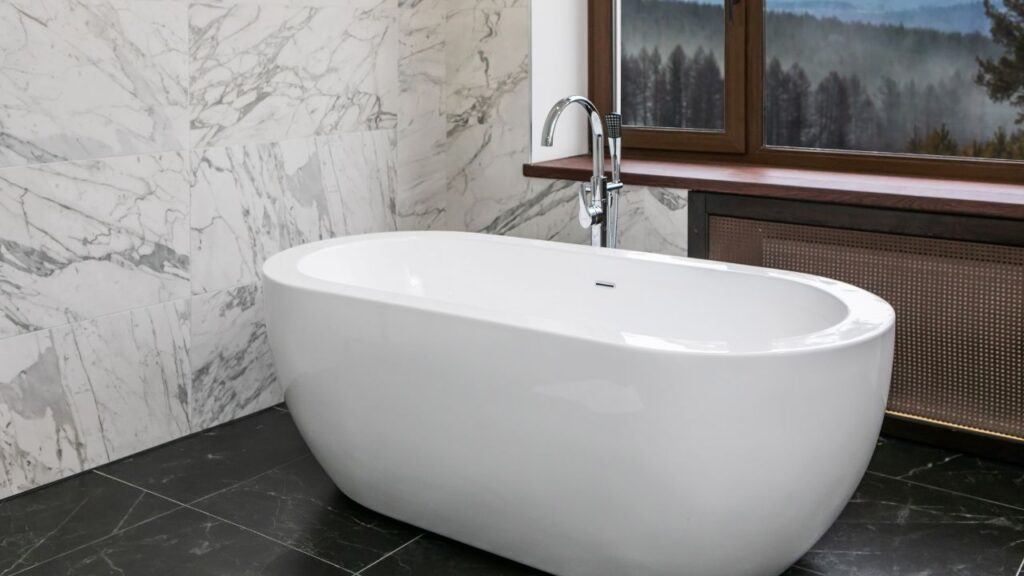
A 60-inch freestanding tub, sitting in open space with proper clearance, occupies a floor zone of roughly 72 to 84 inches in length and 54 to 60 inches in total width. That’s a significant chunk of any bathroom. In a smaller bathroom, a freestanding tub can work, but only if the rest of the layout is designed around it rather than squeezed beside it.
When the Existing Plumbing Shapes the Decision
In most Florida home bathrooms, the plumbing rough-in is already set: the drain location, supply lines, and valve position are as they are. Moving them is possible, but it typically means opening the floor, rerouting lines, and patching, which adds both cost and project time.
The practical implication is that the replacement tub should match the existing rough-in as closely as possible. Same length, same width, same drain side. This is one reason tub replacement (which American Bath & Shower handles as part of their bathtub solutions) is often faster and less disruptive than a full remodel. When the new tub is specified to match the existing layout, the installation stays clean, and the project scope stays predictable.
If the goal is to change the tub type entirely (say, moving from a standard alcove to a walk-in tub), the plumbing implications are worth discussing during the planning stage, not after the tub has been ordered.
FAQs
What is the most common bathtub size in US homes?
The most common is a 60-inch by 30-inch alcove tub. It fits the standard 5-foot alcove opening found in most homes built from the mid-20th century onward and is the baseline most tub manufacturers design around.
Can I put a longer tub in a standard alcove?
Only if the alcove opening is long enough to accommodate it. A 66-inch or 72-inch tub requires an alcove that matches. You can’t compress a tub into a shorter space.
Does a deeper tub take up more floor space?
Not necessarily. Deep-soak alcove tubs often have the same exterior footprint as a standard tub but a taller interior basin. They fit the same rough opening. The difference is in the bathing experience, not the bathroom dimensions.
What’s the minimum bathroom size for a freestanding tub?
A rough working minimum is around 60 square feet to include a freestanding tub with adequate clearance and room for other fixtures. Smaller than that and the tub tends to dominate the room in a way that makes everything feel crowded.
Does tub size affect resale value?
Not directly. What affects resale is whether the tub looks good and functions well. A well-specified, properly installed standard alcove tub in a clean surround reads better to buyers than an oversized tub crammed into a space that can’t support it comfortably.
Get the Size Right Before You Commit
The right tub for your bathroom is the one that fits the space, works with the existing plumbing, and still leaves the room functional once it’s installed. Getting there is mostly a measurement exercise, but it’s worth doing carefully before any orders are placed.If you want a professional eye on the numbers before you decide, American Bath & Shower offers free in-home consultations across Florida. Bring the dimensions, and they’ll help you find the fit that works.