The bathroom is the room in a home where fall risk is highest. Wet floors, hard surfaces, and confined movement patterns create conditions where a momentary loss of balance can become a serious injury. For older adults and anyone managing a mobility or balance concern, the bathroom doesn’t have to be redesigned from scratch to become safer. But it does need to be thought about deliberately.
This blog covers the safety accessories that make the most practical difference in a bathroom: where they go, what the standards say, what to look for when selecting them, and how they fit together as a system rather than a collection of individual add-ons.
Key Takeaways
- Grab bars are the single highest-impact safety upgrade in a bathroom. Placement matters as much as presence.
- The U.S. Access Board specifies grab bar heights between 33 and 36 inches above the floor for horizontal bars at showers and bathtubs, based on functional research.
- Blocking or reinforcement in the wall behind the grab bar is non-negotiable. A bar mounted to drywall without backing will fail under load.
- A walk-in tub addresses the step-over risk that grab bars alone can’t fully solve.
- Safety upgrades don’t have to look institutional. Finish choices and design-integrated accessories have advanced considerably.
Why the Bathroom Demands Specific Attention
Falls are the leading cause of injury-related hospital visits among older adults in the United States, and bathroom falls are disproportionately represented in that data. The combination of wet surfaces, confined space, and the physical demands of getting in and out of a tub or shower creates a risk profile that other rooms in the home don’t share.
The good news is that the bathroom is also one of the most responsive rooms to targeted upgrades. The right safety accessories, installed correctly, change the risk picture meaningfully without requiring a full renovation.
Grab Bars: The Foundation of a Safer Bathroom
Grab bars are the starting point for almost every aging-in-place bathroom assessment. They provide support during the moments of highest instability: stepping over a tub wall, lowering into a seat, standing from a toilet, and navigating a wet floor.
Placement by Location
Correct placement is what separates a grab bar that actually helps from one that’s installed and mostly ignored. The U.S. Access Board’s bathing room guidelines specify that horizontal grab bars at shower stalls should be mounted between 33 and 36 inches above the floor. This range reflects the height at which the human arm can apply meaningful lateral force without overextending. Bars mounted higher or lower reduce mechanical advantage and are harder to use effectively.
In the shower: A bar along the side wall, running the depth of the shower from the entry toward the back wall, gives support during entry, exit, and movement within the enclosure. A second bar on the back wall helps when bending or lowering toward a seat. For a standard 36×36 transfer stall, an L-shaped bar covering both the control wall and half the back wall is the recommended configuration.
At the bathtub: A horizontal bar on the long back wall, mounted 9 inches above the tub rim, assists with lowering and rising. A second bar at 33 to 36 inches above the floor on the same wall supports seated movement. A bar at the foot of the tub, extending from the outer edge, helps with entry and exit.
At the toilet: A side wall bar running at least 42 inches in length, beginning no more than 12 inches from the back wall, supports the sit-to-stand transfer. This is the movement pattern most likely to precede a bathroom fall among older adults.
Grab Bar Specifications: What Actually Matters?
Not all bars perform the same. Here’s what to evaluate when selecting grab bars.
| Specification | Recommended Standard | Why It Matters |
| Diameter | 1.25″ to 2″ (circular) | Grippable without hand fatigue; ADA-compliant range |
| Wall clearance | 1.5″ from wall surface | Allows full hand wrap; prevents knuckle contact |
| Weight capacity | 250 lbs minimum | U.S. Access Board structural requirement |
| Finish | Brushed nickel, matte black, chrome | Corrosion resistance matters in humid environments |
| Mounting | Into studs or wall blocking | Drywall anchors alone are insufficient for safety bars |
| Bar length (shower) | 24″ to 36″ depending on location | Longer bars support a wider range of body positions |
| Bar length (toilet side wall) | 42″ minimum | Covers full range of sit-to-stand movement |
| Surface texture | Knurled or textured grip | Reduces slipping, especially with wet hands |
The Wall Reinforcement Issue
This is the detail that trips up most DIY installations and some contractors who aren’t specifically familiar with accessibility work. A grab bar mounted into drywall, even with toggle bolts, will not reliably hold 250 pounds of lateral force. The backing structure has to be there before the bar goes in.
In new construction or a full remodel, blocking (typically a horizontal section of 2×8 or plywood mounted between studs) is installed at the correct height range before drywall goes up. In an existing bathroom, the options are to open the wall and install blocking or to use a product specifically engineered for retrofit mounting into studs directly.
If you’re having a shower or tub surround replaced or upgraded, this is the right moment to address wall reinforcement at the same time. American Bath & Shower’s fixtures and accessories installations are carried out with proper backing in mind.
Beyond Grab Bars: The Full Safety Accessory Picture
Grab bars address the in-motion risk. Other accessories address the fixtures themselves and the conditions that create fall risk in the first place.
Shower Seats
A fold-down or fixed bench in the shower removes the need to stand for the full duration of bathing. This matters for people with lower limb weakness, balance concerns, or fatigue. It also changes how grab bars are used: a seated bather uses bars differently than a standing one, which should inform bar placement when both a seat and bars are being installed together.
Fold-down seats are the most common choice because they preserve floor space when not in use. Fixed benches offer more stability and support but require a larger shower footprint.
Handheld Showerheads
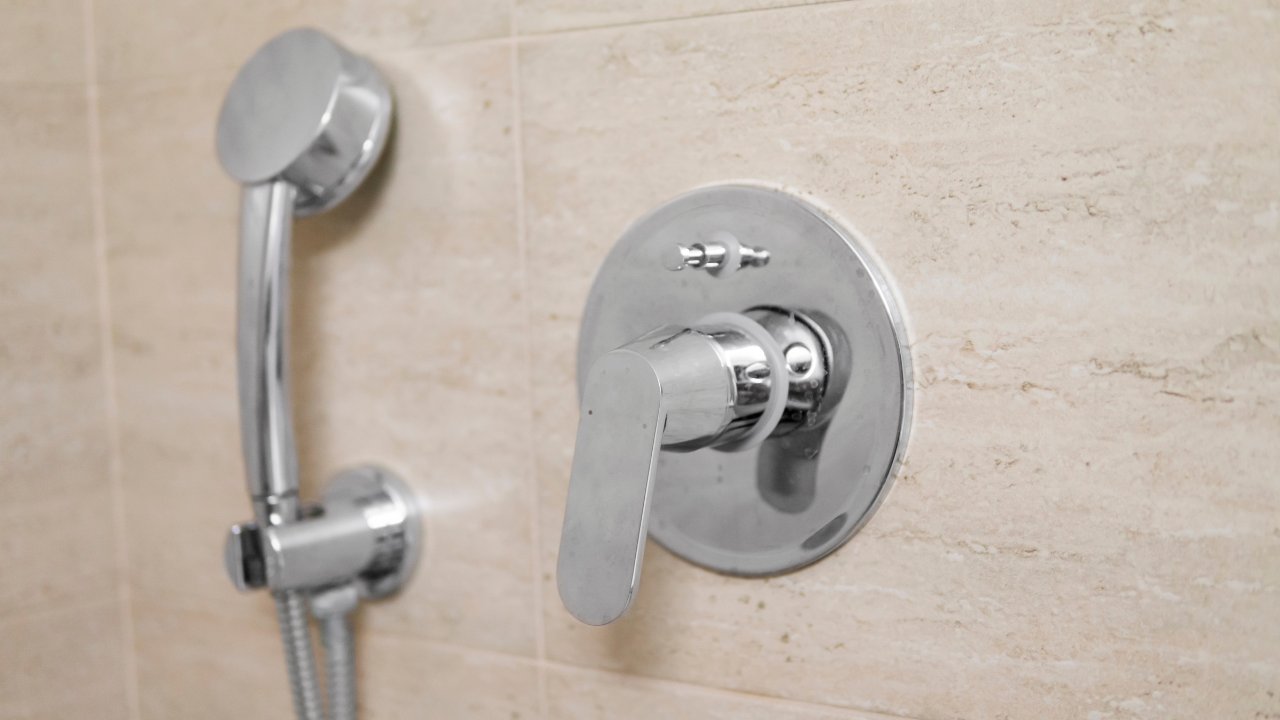
A fixed showerhead requires reaching, turning, and repositioning in ways that create instability. A handheld unit on a slide bar gives the bather control over the direction of water without changing body position. It also makes seated bathing fully functional. The slide bar height should be adjustable and the hose length should be long enough to reach the full shower area without pulling.
Non-Slip Flooring and Mats
The floor is where most bathroom falls actually happen. Textured flooring, anti-slip coatings, and quality bath mats with non-slip backing reduce the risk from wet surfaces. In the shower specifically, the floor material and slope toward the drain affect both drainage and slip resistance. A flat or nearly flat shower floor with a linear drain can be easier to navigate than a sloped floor with a center drain, particularly for anyone using a shower seat or walker.
Walk-In Tubs
Grab bars and safety accessories improve the safety of a standard bathtub, but they don’t eliminate the fundamental challenge: the step-over. A standard alcove tub has a 14 to 18-inch wall that requires lifting one leg fully clear before stepping into the tub. For many older adults, that movement pattern is where the risk is highest.
A walk-in tub removes the step-over entirely. The door opens outward or inward, the user enters at floor level, sits down, and the door seals before the tub fills. American Bath & Shower’s walk-in tub installations are designed for exactly this situation: households where bathing is still preferred but the standard tub entry has become difficult or unsafe.
Designing Safety Without an Institutional Look
One of the most common hesitations around safety accessories is aesthetic. People imagine chrome hospital bars and plastic shower seats, and the mental image doesn’t fit with a bathroom they care about.
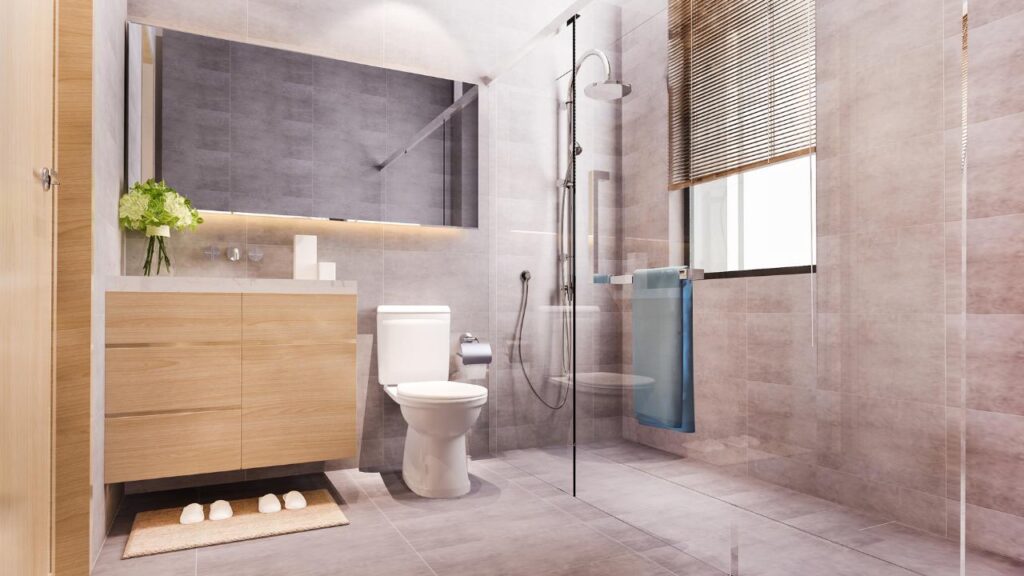
The product landscape has changed considerably. Grab bars now come in matte black, brushed gold, brushed nickel, and oil-rubbed bronze. Many are designed with architectural profiles that read as intentional fixtures rather than afterthoughts. Fold-down teak shower seats look nothing like institutional plastic. Linear drains and curbless shower entries can be purely design decisions that also happen to make the space more accessible.
The best approach is to plan safety and aesthetics together from the start rather than trying to blend safety products into a finished design later. When the two are coordinated, the result is a bathroom that functions safely and looks exactly as it was meant to.
FAQs
How many grab bars does a typical shower need?
A standard shower typically benefits from at least two: one along the side wall for entry and exit support, and one on the back wall for in-shower stability. Adding a third at a different height or angle expands the range of supported positions.
Can grab bars be installed in a tiled shower without replacing the tile?
Yes, if the installation hits studs or existing blocking. The drill-through approach works on most tile if done carefully. The more important question is whether the wall behind the tile has the structural backing to support the load. If it doesn’t, the tile will need to be accessed to add blocking.
Are decorative grab bars as strong as standard safety bars?
It depends on the product. Weight capacity varies, and some decorative bars are not rated for full safety loads. Always check the weight rating before installing a bar as a safety fixture.
Is a curbless shower always better for aging in place?
It removes the curb step-over and makes the space wheelchair accessible, which is generally positive. The trade-off is that curbless designs require careful drainage planning to prevent water from spreading onto the bathroom floor. Done correctly, it’s one of the most impactful layout decisions for long-term accessibility.
What’s the difference between a grab bar and a towel bar for safety purposes?
Towel bars are not rated for body weight loads. They’re mounted to hold towels, not to bear lateral or downward force from a person. Using a towel bar as a grab bar is a common and dangerous mistake. If a towel bar is in the location where a grab bar should be, the towel bar should be replaced, not repurposed.
Getting the Safety Upgrades Right
Safety accessories work best when they’re planned together, installed correctly, and matched to how the bathroom is actually used. A grab bar in the wrong location is better than no bar, but a well-placed system covers the full movement sequence: entering, bathing, exiting, and using the toilet.If you’re not sure where to start, American Bath & Shower offers free in-home consultations across Florida and can assess your bathroom’s current layout and identify the upgrades that will make the most practical difference.